
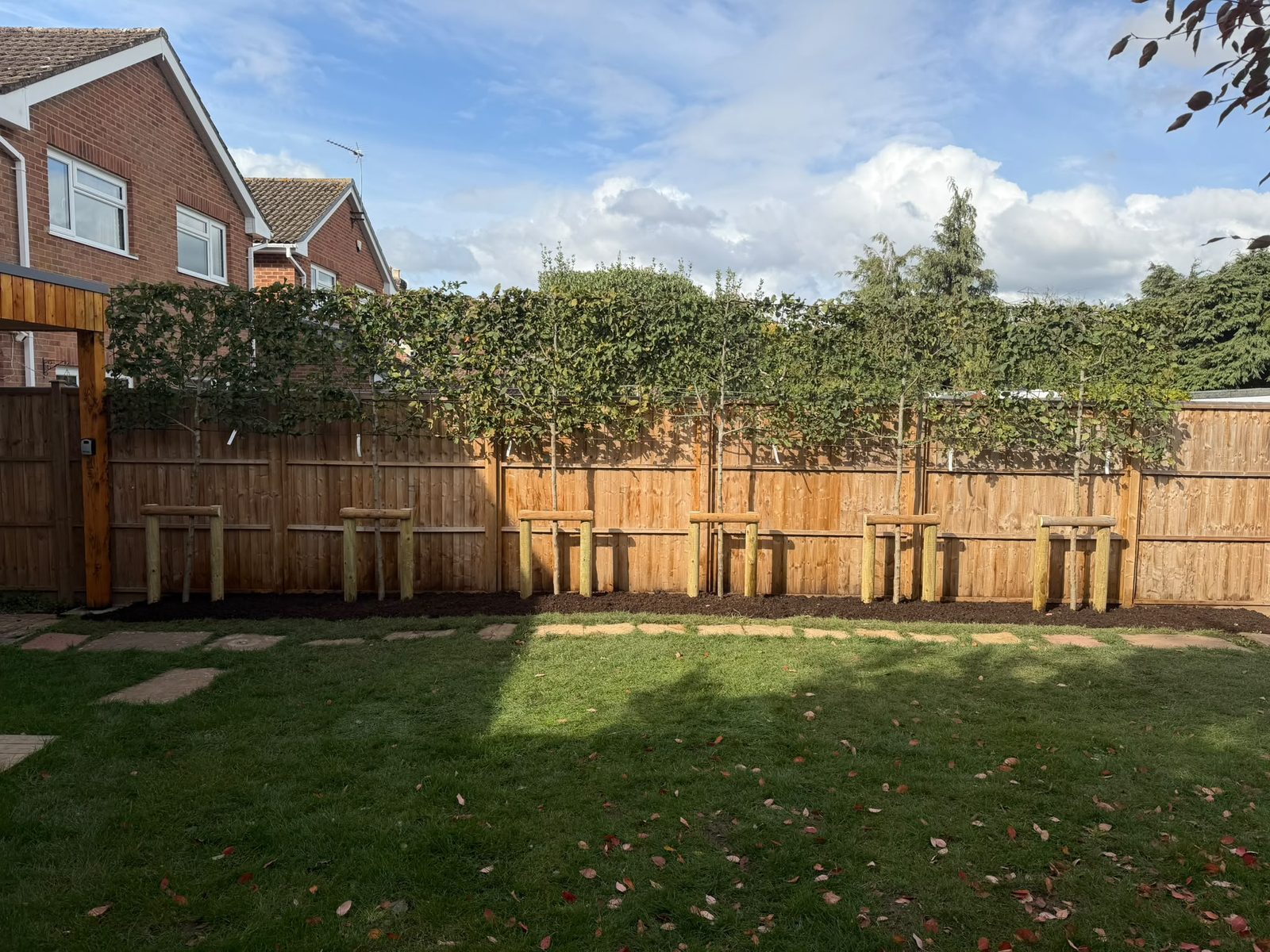
Pleached trees for privacy screening
We supply, plant and prune pleached trees across the New Forest, and in Southampton, Winchester and Romsey. Any species that can be pleached, on frames made to fit the space.
Book a Site VisitAny species that can be pleached. We supply the trees as well as plant them, and come back to prune them.
Frames made to size. Custom frame sizes, so the screen covers the stretch that needs it, at the height that needs it.
Tight access is no obstacle. Our 0.8 tonne micro digger fits through the front door of a house.
What a pleached tree is
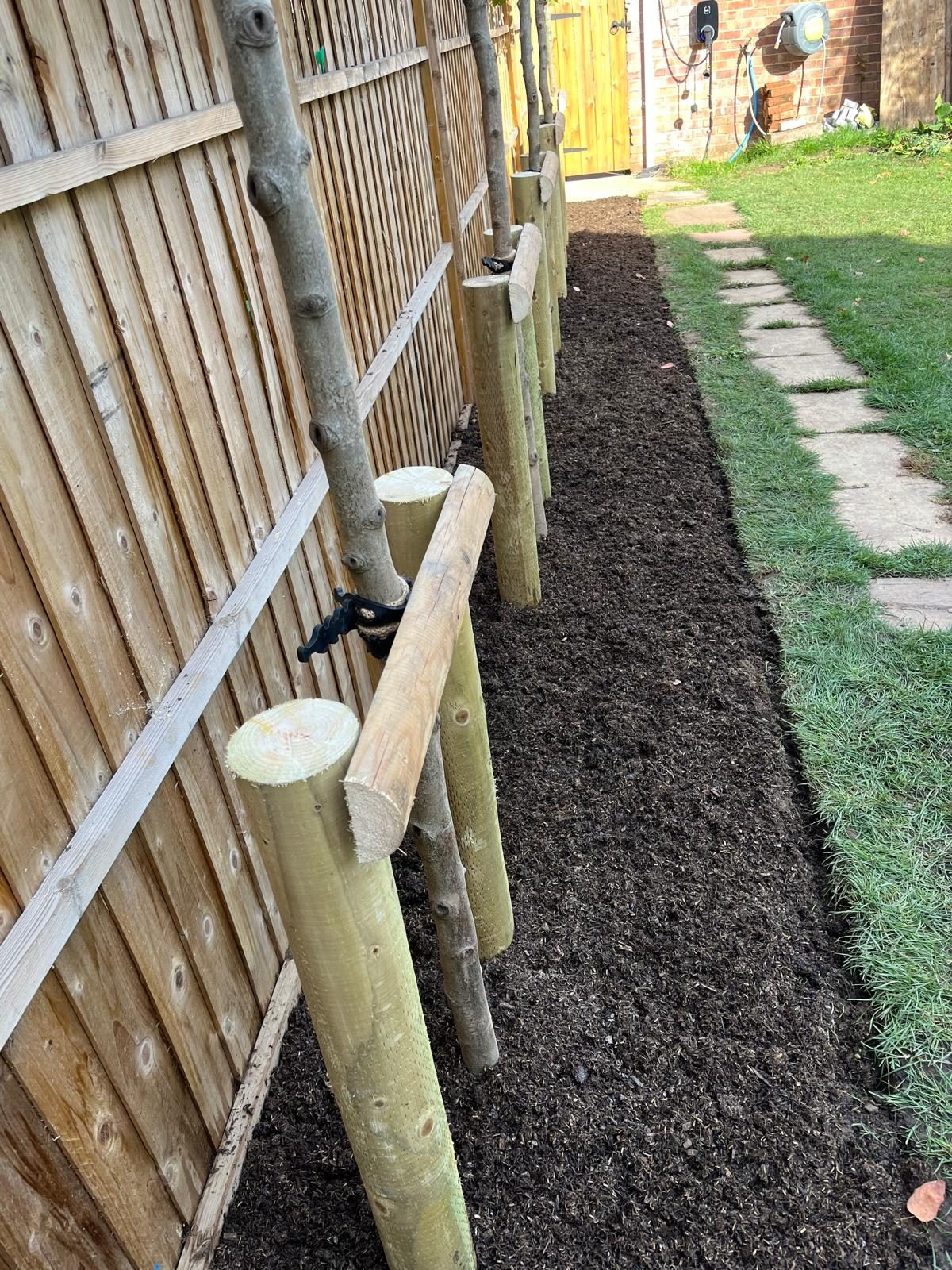
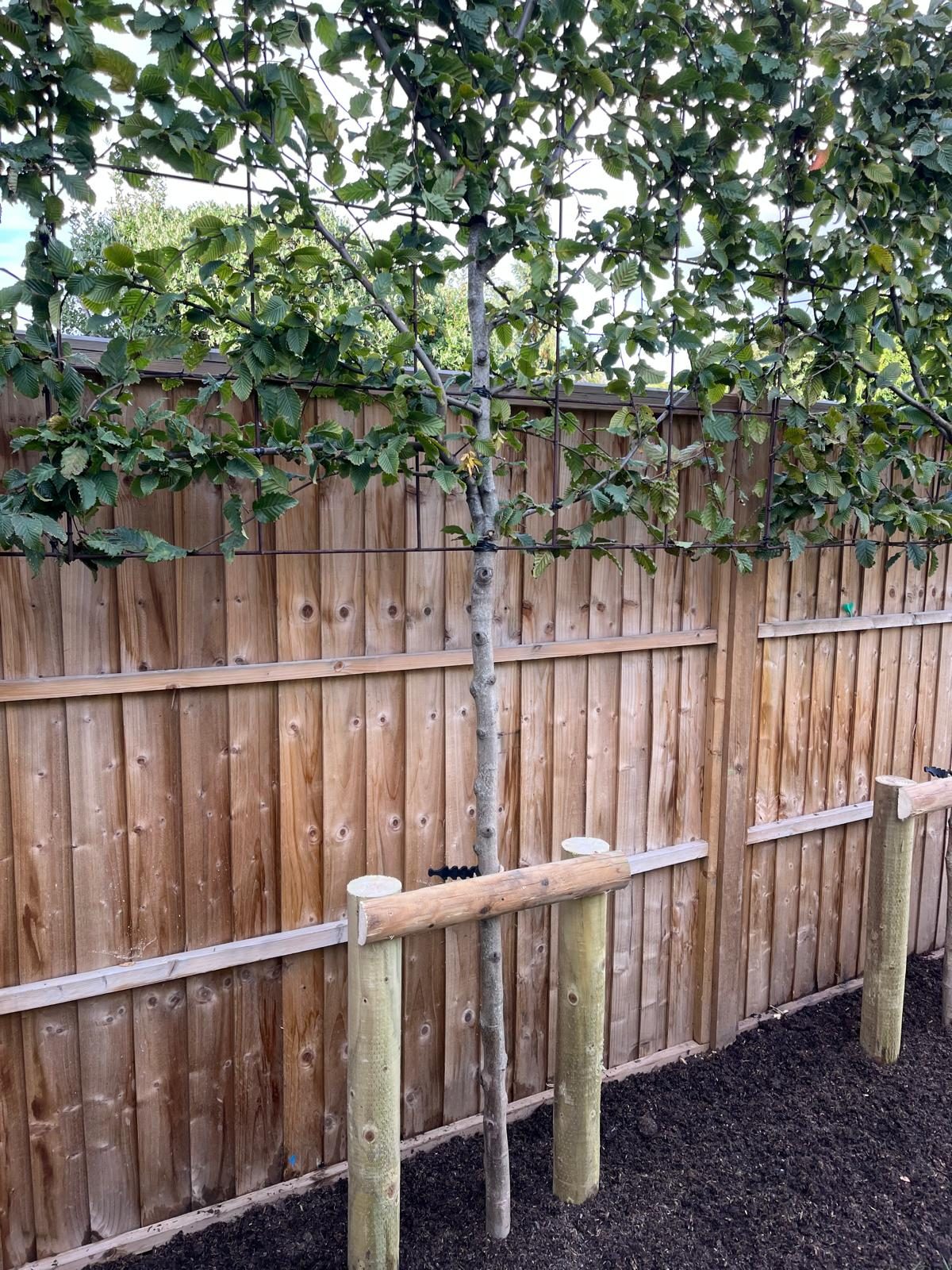
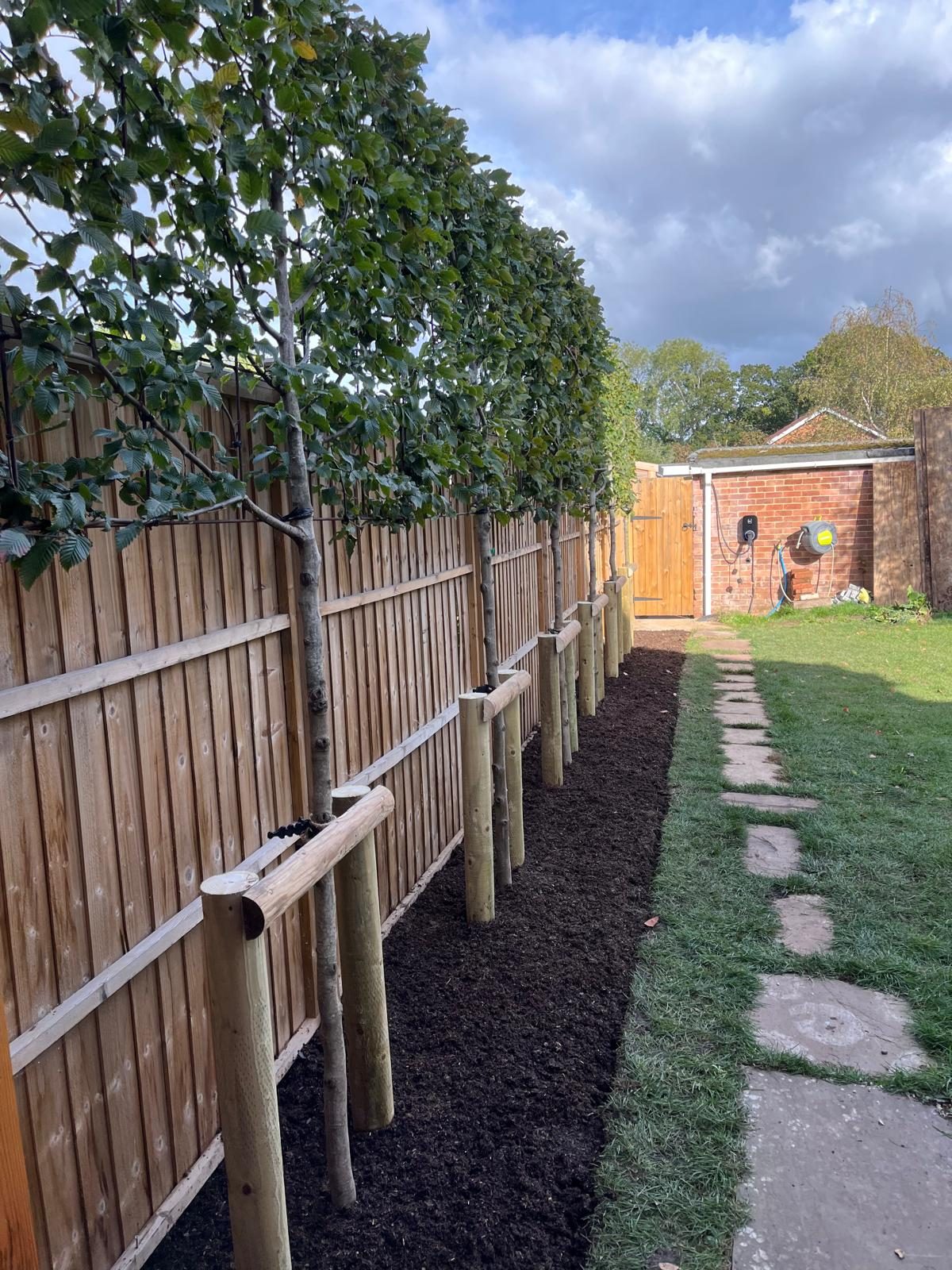
A pleached tree has a clear, straight stem and a head of branches trained flat on a frame. Planted in a row, the heads join into a screen of leaves held above the ground, which is why they're sometimes called a hedge on stilts.
That makes them one of the neatest ways to add privacy above a fence or wall. The height goes where it's needed, and the ground underneath stays free for a path, a border or a narrow side passage.
The trees arrive already trained to their frames, so the screen is at height from the day it's planted. There's no waiting years for a hedge to grow up to it.
Supply, planting and aftercare
Choosing a species
We can supply any species that can be pleached. These are some of the common choices, and how they differ. The biggest question is usually how much cover you want in winter.
Deciduous
Hornbeam (Carpinus betulus). Tough, happy on heavy clay, and quick to recover from pruning. Young growth holds its dead leaves through winter if it's pruned in late summer. Rockhampton Red ('Lochglow') adds deep red, burgundy and purple autumn colour.
Beech (Fagus sylvatica). Holds its winter leaves in the same way, in green or copper forms. Prefers free-draining soil and dislikes heavy, waterlogged clay.
Lime (Tilia). The traditional choice for formal pleached avenues. Bare in winter, and some limes drip honeydew from aphids in summer, so they're best kept away from patios and parked cars.
Evergreen
Photinia (Photinia × fraseri 'Red Robin'). Glossy evergreen leaves, with a flush of bright red new growth after each trim.
Holm oak (Quercus ilex). Dark evergreen leaves that stand up well to wind and salt air, which suits gardens near the coast.
Portuguese laurel (Prunus lusitanica). Dense, dark, glossy leaves on red stalks, cover all year, and happy with regular clipping.
When access is tight
The gardens that most need screening are often the hardest to get into: terraced houses, narrow side passages, back gardens with no rear gate.
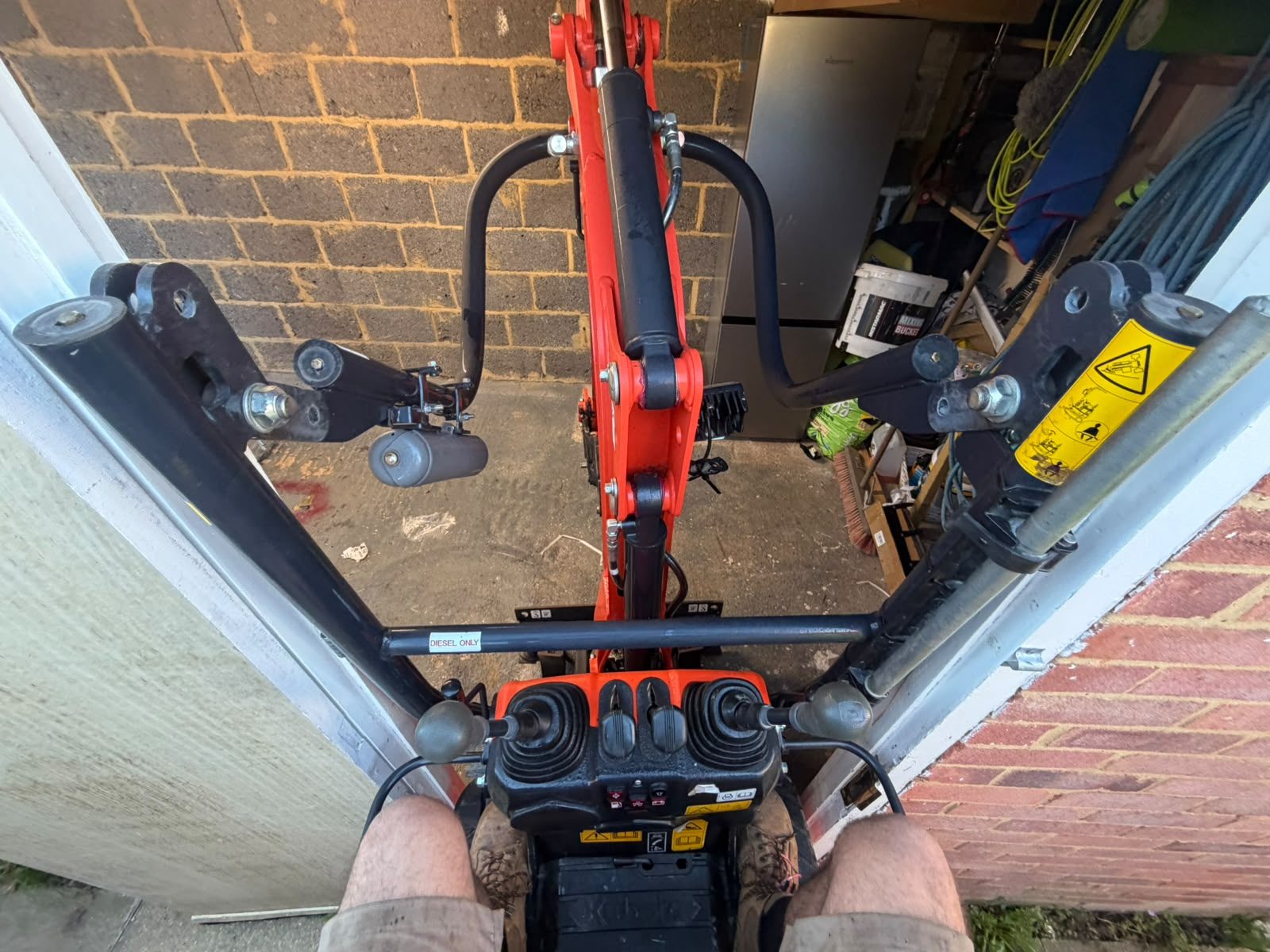
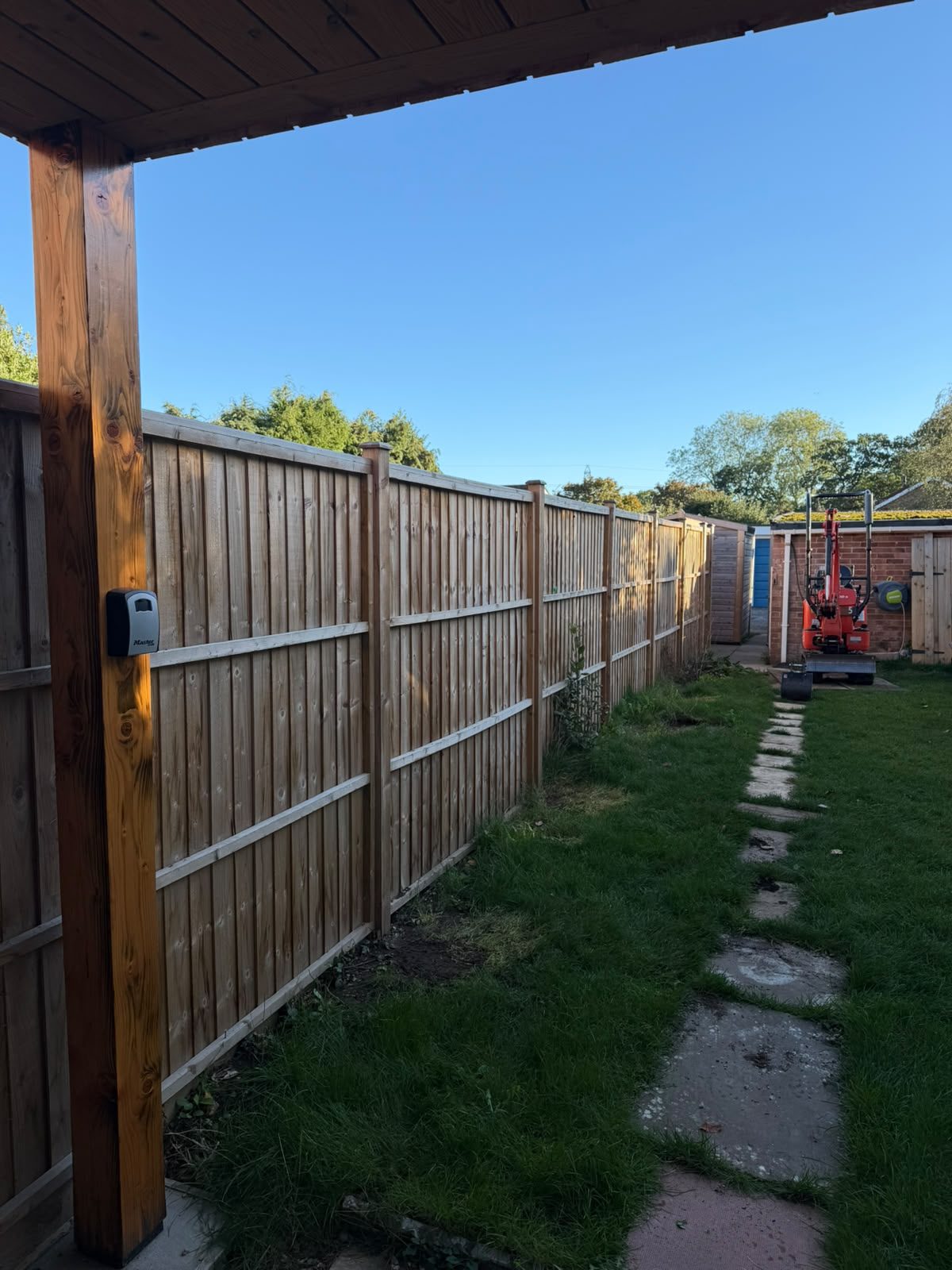
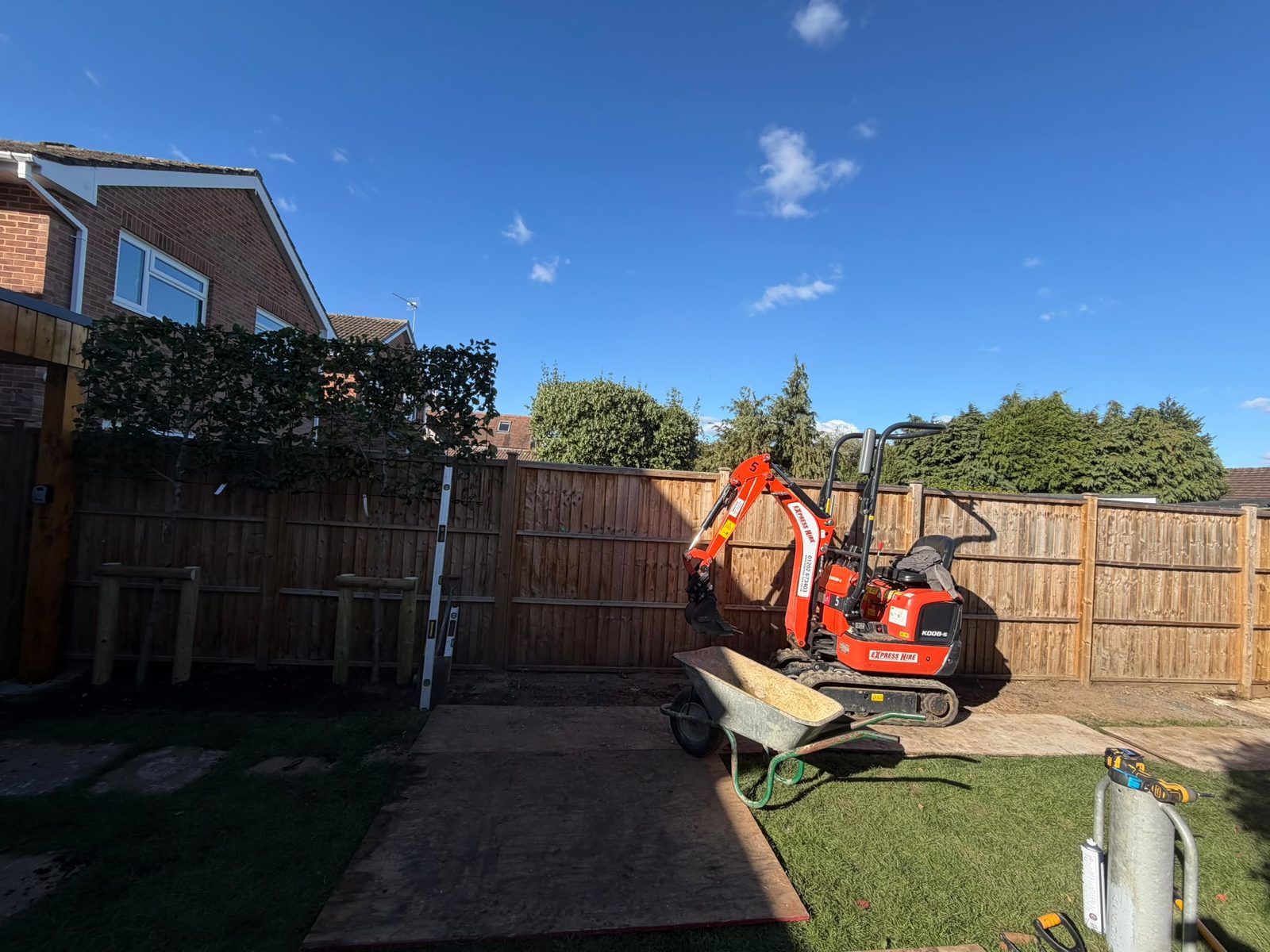
Our 0.8 tonne micro digger is narrow enough to fit through the front door of a house, so the planting trench can still be dug by machine. On the Romsey job below, it went in through the garage.
Recent project | Pleached hornbeam near Romsey
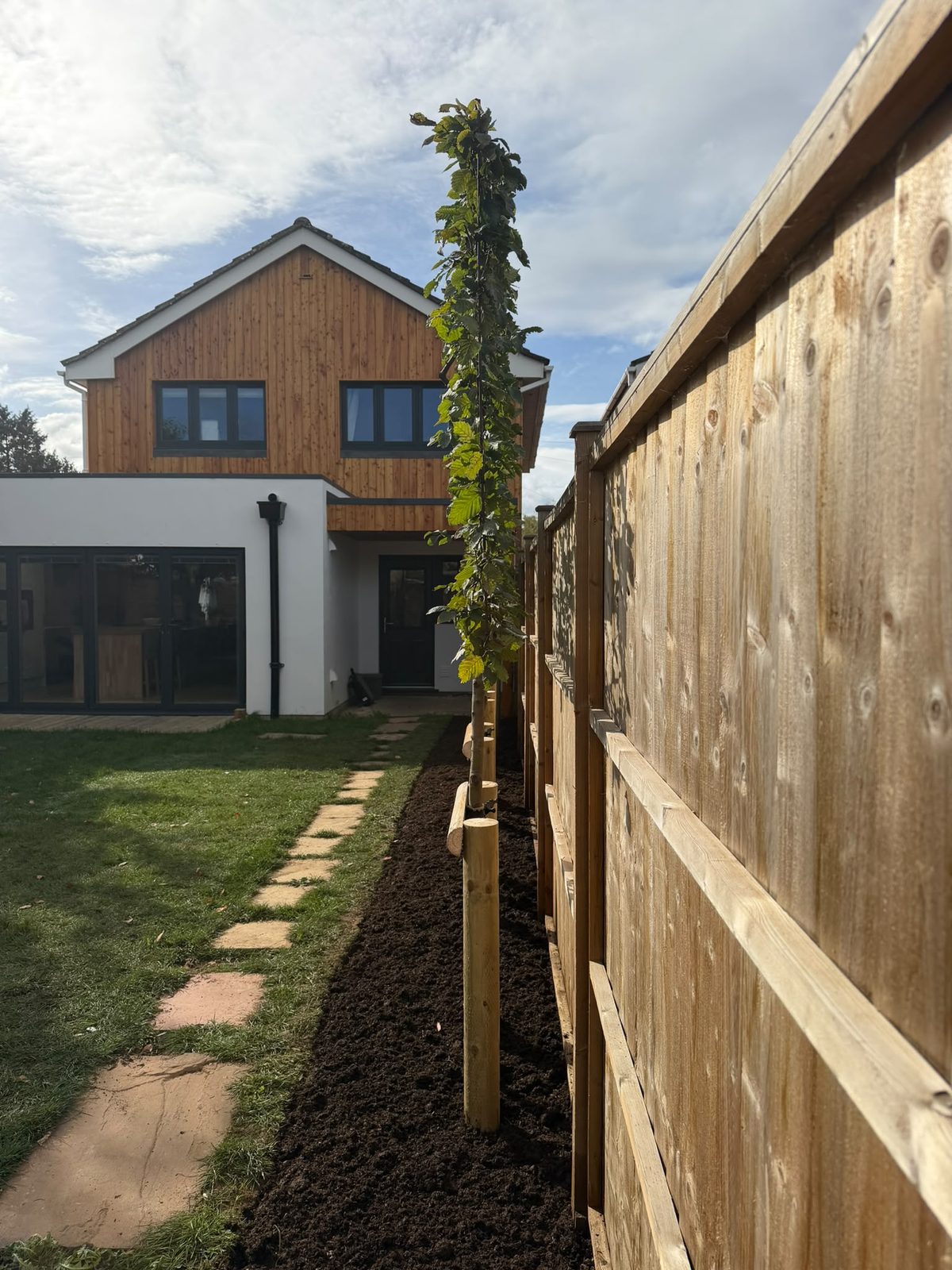
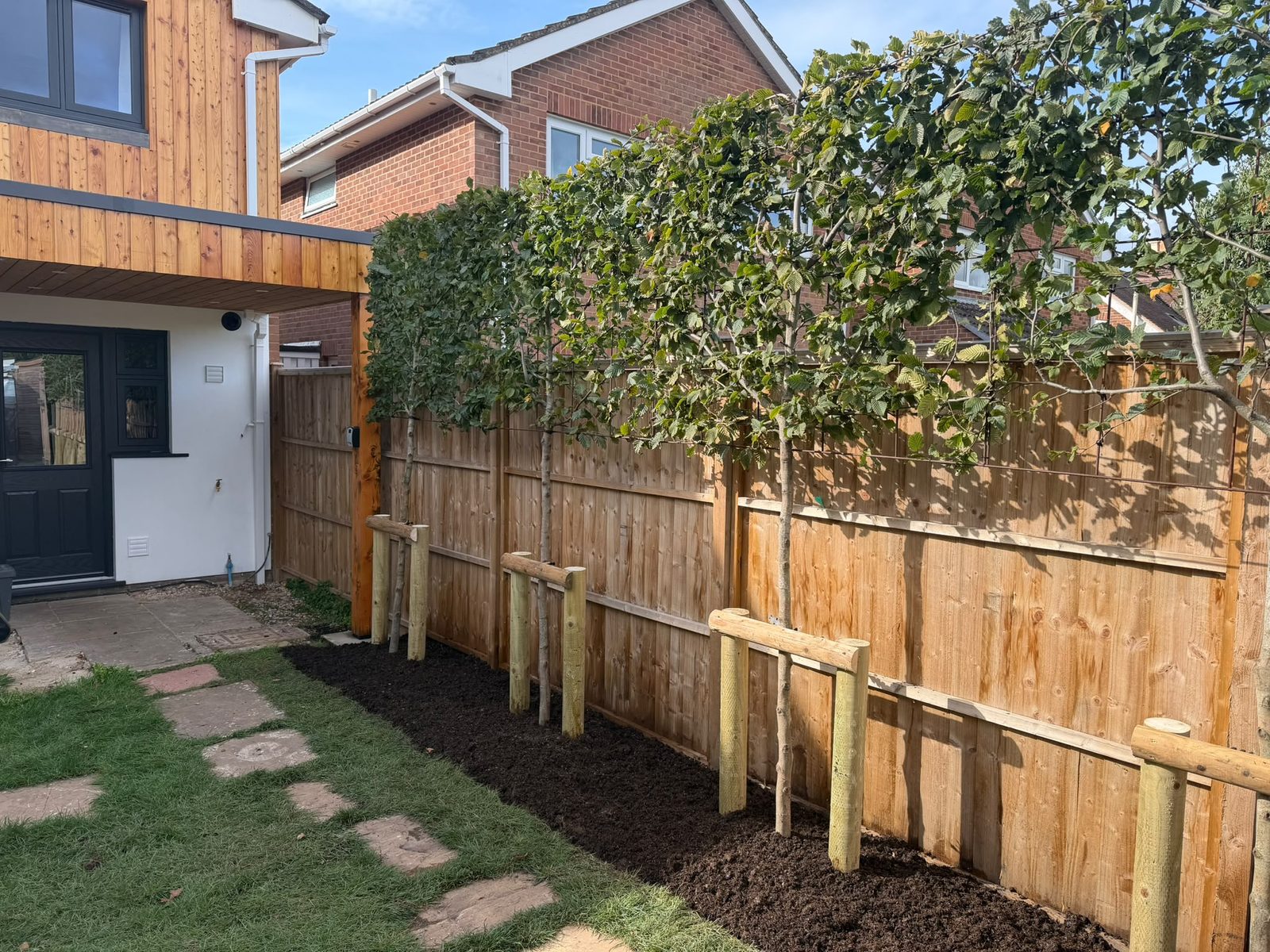
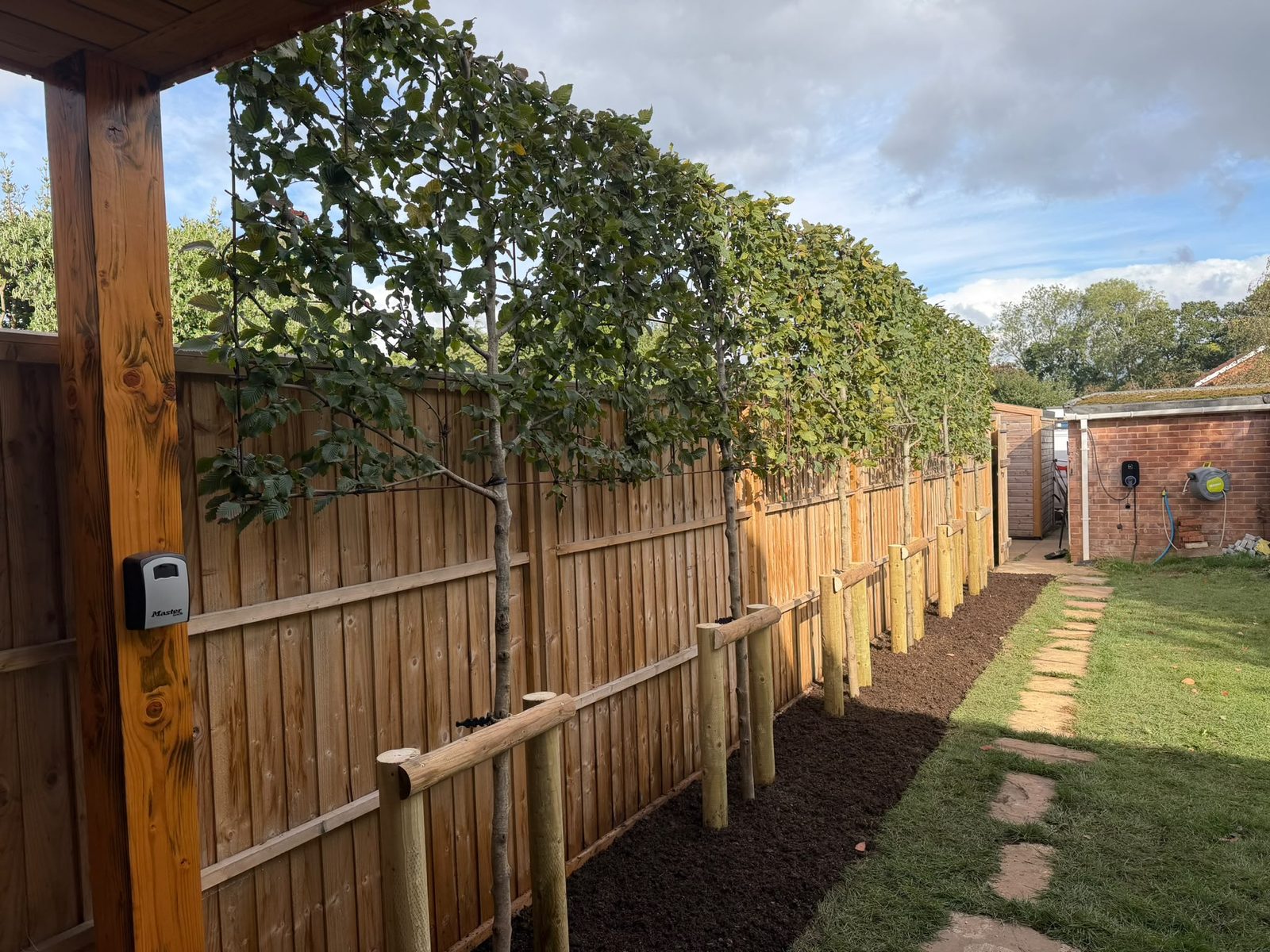
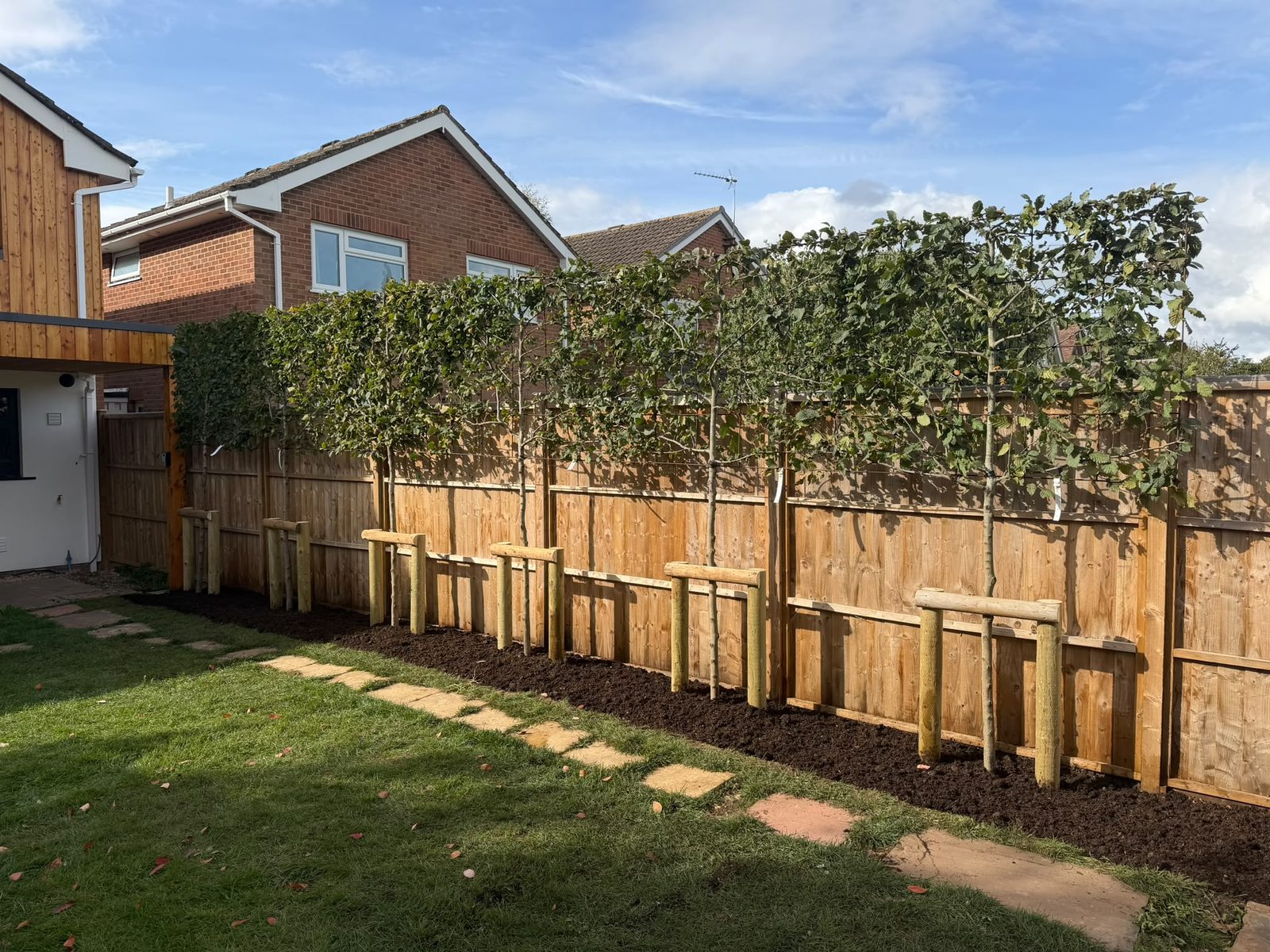
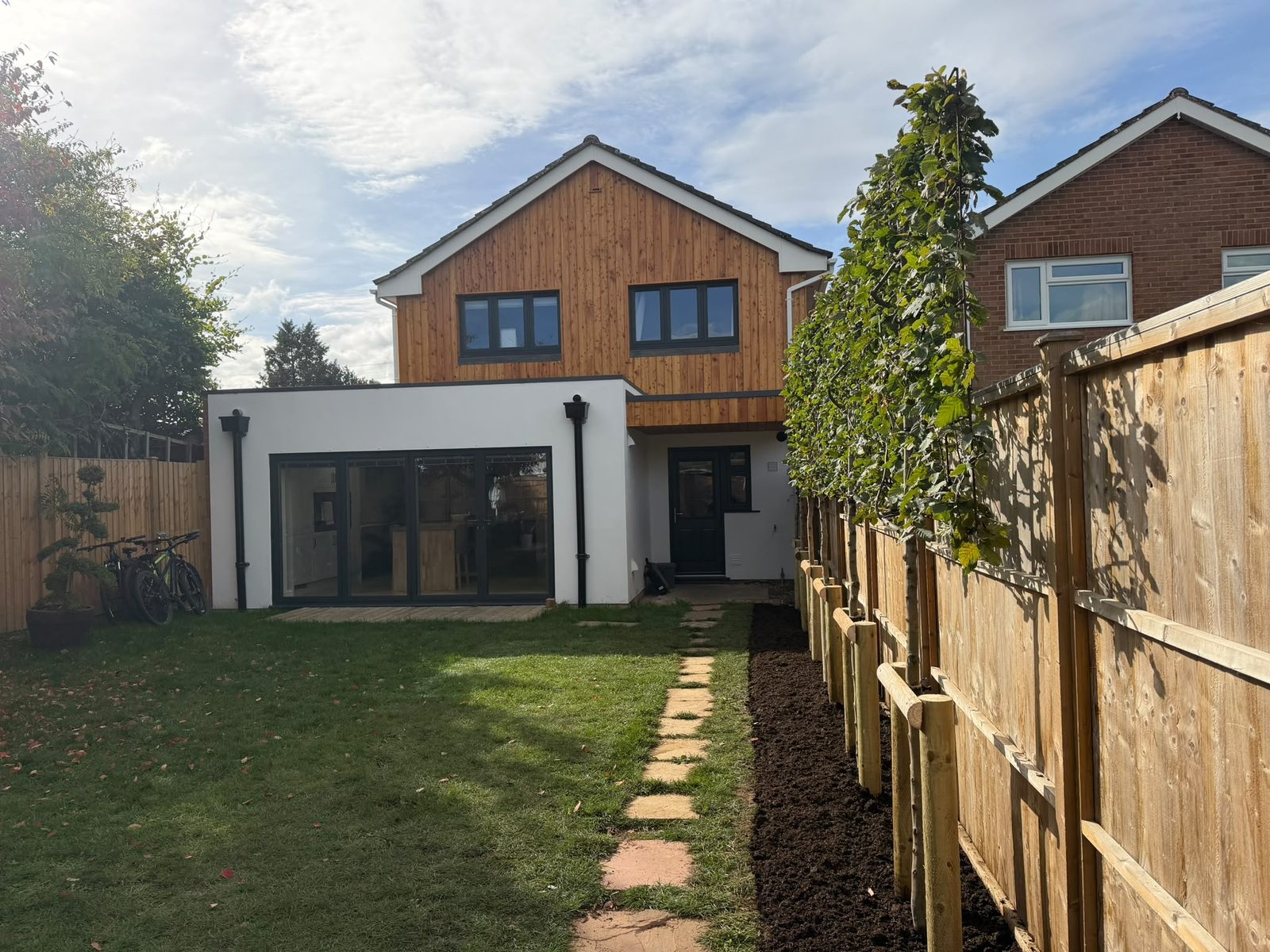
A long, narrow back garden overlooked by the houses behind. We planted a row of Rockhampton Red hornbeam along the boundary fence, with locally sourced trees that Louie wove onto their frames by hand.
Where we plant
We're based in the New Forest and plant pleached trees right across it. We also take on pleached tree work in Southampton, Winchester and Romsey.
Common questions
Do pleached trees give privacy in winter?
Evergreens such as photinia, holm oak and Portuguese laurel do, all year round. Hornbeam and beech hold their dead, brown leaves through winter on young growth, a habit called marcescence, so a screen pruned in late summer keeps much of its cover until spring. Lime and most other deciduous trees go bare.
When should pleached trees be pruned?
It depends on the species. For hornbeam and beech it's late summer: the young growth is what holds its leaves through winter, so pruning then keeps the screen clothed. Mature trees left to grow on let their leaves go.
Can you plant pleached trees where there's no side access?
Usually, yes. Our 0.8 tonne micro digger is narrow enough to fit through the front door of a house.
Do you supply the trees, or only plant them?
Both. We supply the trees and plant them, in any species that can be pleached.
Can the frames be made to a particular size?
Yes. We use custom frame sizes, so the screen fits the length and height of the space.
Will you look after pleached trees you didn't plant?
Yes. Pruning and care for pleached trees is part of our Aftercare & Establishment service, wherever the trees came from.
Which areas do you cover?
We're based in the New Forest and work across it, and in Southampton, Winchester and Romsey.
Thinking about a pleached screen?
We'll look at what needs screening, from where, and how we'd get the trees in.